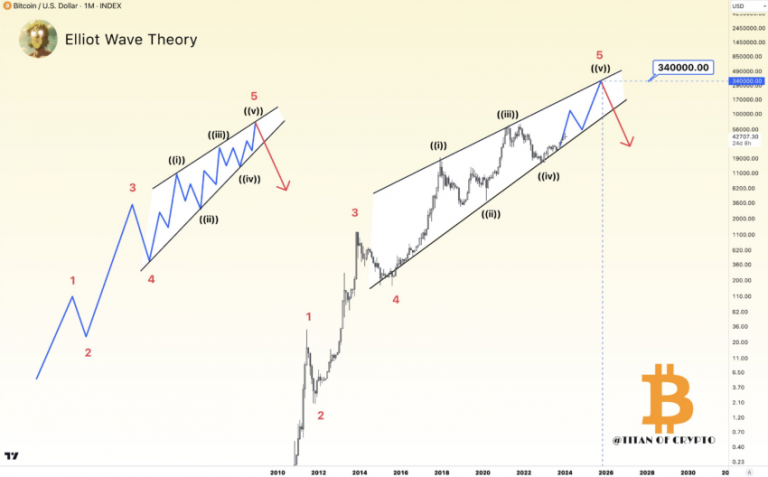
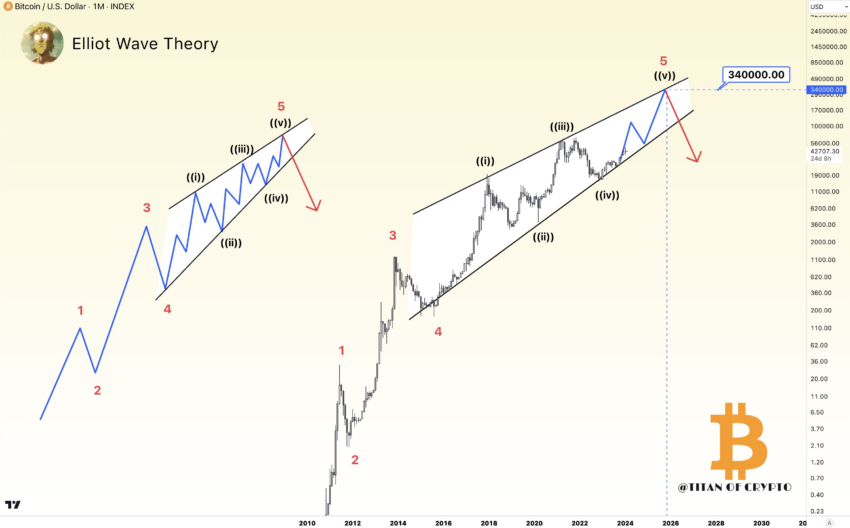
The Bitcoin price in 2025 is a topic of much speculation. Will it soar to new heights, or face a downturn? This analysis delves into potential factors influencing the price, including market sentiment, regulatory changes, and technological advancements. We’ll explore various scenarios, supported by data and analysis, to paint a clearer picture of the year ahead.
Our forecast considers the interplay of macroeconomic factors, like inflation and interest rates, and their possible effects on Bitcoin’s price. We also analyze technical indicators and historical trends to identify potential price patterns. Finally, we discuss the growing adoption of Bitcoin, including its use cases and potential barriers to wider adoption.
Bitcoin Price Outlook 2025
Bitcoin’s price trajectory in 2025 is anticipated to be influenced by a complex interplay of market sentiment, regulatory developments, and technological advancements. While predicting precise price points is inherently challenging, a careful analysis of these factors allows for a reasonable assessment of potential scenarios. The year could witness both significant upward and downward movements, reflecting the volatile nature of the cryptocurrency market.Bitcoin’s price fluctuations in 2025 will likely be shaped by evolving market sentiment.
Investor confidence and overall market conditions will significantly impact trading volume and price action. Positive news regarding Bitcoin’s adoption by institutional investors or significant breakthroughs in its technology could generate bullish sentiment. Conversely, regulatory uncertainties or negative market trends could lead to price declines.
Market Sentiment Influence
Market sentiment, a crucial driver of Bitcoin’s price, is influenced by news cycles, social media trends, and investor psychology. Positive news, such as increasing institutional adoption or groundbreaking technological advancements, can fuel a bullish market sentiment, potentially driving price increases. Conversely, regulatory concerns, market corrections, or negative news surrounding the cryptocurrency market can lead to bearish sentiment and price drops.
The unpredictable nature of market sentiment underscores the difficulty in precisely predicting price movements. For example, the 2021 bull run was partly driven by significant investor interest and the belief in Bitcoin’s potential.
Regulatory Developments Impact
Regulatory developments play a pivotal role in shaping Bitcoin’s price trajectory. Clear and consistent regulations can foster trust and stability in the market, leading to price appreciation. Conversely, ambiguous or restrictive regulations can deter investment and lead to price volatility. The evolving regulatory landscape surrounding cryptocurrencies globally significantly influences investor confidence and consequently impacts Bitcoin’s price. Countries like the United States, with its ongoing regulatory discussions on cryptocurrencies, are crucial examples of how regulation can influence Bitcoin’s price.
Technological Advancements and Adoption
Technological advancements and increasing adoption of Bitcoin are also key factors. Innovations in blockchain technology, such as scalability improvements or new applications, can enhance Bitcoin’s value proposition, driving up prices. Conversely, technological setbacks or lack of adoption could negatively impact market sentiment and lead to price drops. The integration of Bitcoin into mainstream financial systems, including its use in payments or investments, is a crucial aspect.
For instance, the growing interest in Bitcoin as a store of value and its use in cross-border payments can boost market demand.
Potential Bitcoin Price Scenarios in 2025
| Price Range |
Description |
| $25,000 – $35,000 |
A relatively stable period with moderate growth, potentially driven by cautious investor optimism and gradual regulatory clarity. Market sentiment will be a key factor, influenced by the progress of technological advancements and adoption. |
| $35,000 – $50,000 |
A period of moderate bullishness, potentially driven by strong institutional adoption and positive regulatory developments. Significant technological breakthroughs could accelerate price growth in this range. |
| $10,000 – $20,000 |
A bearish scenario, characterized by increased regulatory scrutiny, market downturns, or significant setbacks in technological development. Negative market sentiment could drive the price down. |
Projected Bitcoin Price Fluctuations (2025)
(Illustrative Graph: A line graph depicting potential Bitcoin price fluctuations throughout 2025. The graph would show a fluctuating line with periods of upward and downward trends, reflecting the anticipated volatility. The y-axis would represent the Bitcoin price, and the x-axis would represent the time periods in 2025.)
(Note: The graph is a visual representation of potential price fluctuations and is not a definitive prediction.)
Cryptocurrency Market Trends in 2025
The cryptocurrency market in 2025 is poised for continued evolution, presenting both opportunities and challenges for Bitcoin. Factors such as institutional investment, regulatory developments, and technological advancements will significantly shape the landscape, influencing Bitcoin’s price and overall market dynamics. Understanding these trends is crucial for investors seeking to navigate the future of cryptocurrencies.The multifaceted nature of the cryptocurrency market, with its constantly shifting dynamics, necessitates a nuanced understanding of the various trends that could impact Bitcoin’s performance.
This includes the interplay between different cryptocurrencies, the evolving regulatory environment, and the introduction of novel technologies. Predicting precise outcomes is difficult, but analyzing these trends allows for a more informed outlook on the potential trajectories of Bitcoin and the broader crypto ecosystem.
General Cryptocurrency Market Trends
The cryptocurrency market in 2025 is expected to see continued growth, albeit with fluctuating periods. Adoption by institutional investors will likely drive significant capital flows, potentially creating both upward and downward pressures on prices, depending on investor sentiment. Furthermore, ongoing technological developments, such as the refinement of blockchain technology and the emergence of new applications, will potentially reshape the cryptocurrency market.
Bitcoin vs. Other Major Cryptocurrencies
Bitcoin, while the pioneering cryptocurrency, faces competition from other major cryptocurrencies like Ethereum and stablecoins. The competitive dynamics will hinge on factors like scalability, functionality, and the level of adoption by developers and users. Bitcoin’s strength lies in its established history and widespread recognition, but other cryptocurrencies could potentially attract market share depending on their perceived utility and innovation.
Influence of Institutional Adoption
Institutional adoption is anticipated to significantly impact the cryptocurrency market. Major financial institutions entering the space could introduce significant capital, potentially boosting market valuations. However, this could also lead to increased volatility as institutional investors react to market sentiment and regulatory changes. The integration of Bitcoin and other cryptocurrencies into traditional financial systems is a key factor in this evolution.
Examples include institutional investment in Bitcoin ETFs and the development of crypto-backed financial products.
Technological Advancements
Technological advancements in the cryptocurrency space, including improvements in blockchain scalability, the development of decentralized finance (DeFi) applications, and the emergence of the metaverse, are likely to shape the future. These advancements could either enhance or disrupt the market depending on their acceptance and integration into the ecosystem. Examples include the development of layer-2 scaling solutions for Bitcoin and the integration of NFTs into various industries.
Regulatory Frameworks and Policies
Regulatory frameworks and policies play a critical role in the cryptocurrency market’s health and potential impact on Bitcoin. A clear and consistent regulatory approach is crucial for fostering trust and investment. Governments globally are still developing regulatory frameworks, which can influence the market’s direction. The recent trend of regulatory clarity in certain jurisdictions demonstrates a move towards establishing a more stable environment.
Current and Potential Future Regulatory Landscape
The current regulatory landscape for cryptocurrencies is fragmented, with varying levels of regulation across jurisdictions. This inconsistency creates challenges for businesses and investors operating in the global cryptocurrency market. Potential future regulatory changes in 2025 may focus on aspects such as anti-money laundering (AML) compliance, investor protection, and tax regulations. This creates uncertainty, but also the opportunity for clear and standardized regulations to emerge.
Potential Future Trends in the Cryptocurrency Market
| Trend |
Impact on Bitcoin |
| Increased institutional investment |
Potential for price appreciation, but also volatility |
| Technological advancements (e.g., scalability solutions) |
Potential to enhance Bitcoin’s utility and adoption |
| Strengthening regulatory frameworks |
Potential for increased stability and investor confidence |
| Rise of decentralized finance (DeFi) |
Could potentially attract users, but also introduce new risks |
| Continued competition from other cryptocurrencies |
Bitcoin’s dominance may be challenged, but its established presence could remain a factor |
Macroeconomic Factors and Bitcoin’s Price
Bitcoin’s price is intricately linked to broader macroeconomic trends. Inflation, interest rates, and global economic conditions all exert considerable influence on the cryptocurrency market. Understanding these relationships is crucial for assessing potential Bitcoin price movements in 2025.The current macroeconomic landscape is characterized by persistent inflation in many economies, fluctuating interest rates, and ongoing geopolitical uncertainties. Central banks worldwide are grappling with the challenge of balancing inflation control with economic growth.
These factors create an environment of volatility, which often impacts Bitcoin’s price alongside other assets.
Influence of Inflation on Bitcoin
Inflation erodes the purchasing power of fiat currencies. In such environments, Bitcoin, as a decentralized digital asset, can serve as a hedge against potential currency devaluation. Historically, periods of high inflation have coincided with increased Bitcoin adoption and price appreciation, as investors seek alternative stores of value. However, the relationship is not always straightforward, as other factors, such as investor sentiment and regulatory developments, also play a significant role.
Impact of Interest Rates on Bitcoin
Central bank interest rate decisions significantly impact the broader financial markets. Higher interest rates often attract capital to traditional fixed-income instruments, potentially reducing investor interest in Bitcoin. Conversely, lower interest rates might encourage risk-seeking behavior, potentially boosting Bitcoin demand. The specific impact on Bitcoin prices will depend on the interplay of various factors.
Global Economic Conditions and Bitcoin
Global economic growth or recession significantly influences investor sentiment and risk appetite. During periods of economic uncertainty or recession, investors often seek safe-haven assets, which can affect Bitcoin’s price. Conversely, periods of robust economic growth might increase investor confidence and potentially lead to higher Bitcoin prices.
Federal Reserve’s Monetary Policy and Bitcoin
The Federal Reserve’s monetary policy decisions, including interest rate adjustments and quantitative easing measures, directly impact the broader financial markets. Changes in the Federal Reserve’s policy often correlate with shifts in investor sentiment and risk tolerance, which in turn affect Bitcoin’s price. For example, if the Federal Reserve raises interest rates aggressively, it could attract investors to traditional assets, potentially suppressing Bitcoin’s price.
Correlation with Other Asset Classes
Bitcoin’s price often exhibits correlations with other asset classes, such as gold and stocks. During periods of economic uncertainty, investors might shift capital to both gold and Bitcoin, potentially increasing the price of both assets. However, the exact correlation patterns can vary depending on the specific economic context.
Potential Macroeconomic Impacts on Bitcoin
| Economic Condition |
Impact on Bitcoin |
| High inflation |
Potential increase in Bitcoin price as a hedge |
| Rising interest rates |
Potential decrease in Bitcoin price as investors seek higher returns in traditional assets |
| Global economic recession |
Potential decrease in Bitcoin price due to investor risk aversion |
| Stable economic growth |
Potential for moderate price appreciation, dependent on investor sentiment |
| Federal Reserve easing monetary policy |
Potential increase in Bitcoin price as risk tolerance increases |
Technical Analysis of Bitcoin’s Price
Technical analysis provides a framework for interpreting historical price movements and identifying potential future trends in Bitcoin’s price. By examining patterns and indicators, investors can gain insights into market sentiment and potentially anticipate price adjustments. This approach, however, should be viewed as a tool alongside other factors influencing the market, not as a standalone predictor of success.Understanding historical price patterns, key support and resistance levels, and the application of relevant technical indicators is crucial for evaluating Bitcoin’s price trajectory in 2025.
Analyzing past bull and bear markets, along with identifying potential indicators for 2025, will provide a more comprehensive understanding of the market’s potential behavior.
Historical Price Patterns and Potential Future Movements
Bitcoin’s price history reveals recurring patterns, including periods of significant price increases (bull markets) and declines (bear markets). These patterns often reflect market sentiment and macroeconomic factors. Recognizing these patterns can offer insights into potential future price movements. For instance, the 2017 bull run was fueled by increasing investor interest and adoption, while the 2018 bear market saw a decline in investor confidence and regulatory uncertainty.
Understanding these factors and their impact on Bitcoin’s price is vital for forming an informed perspective on 2025’s potential trajectory.
Key Technical Indicators for Evaluating Bitcoin’s Price in 2025
Several technical indicators can be utilized to assess Bitcoin’s price. These include moving averages, relative strength index (RSI), volume, and price action analysis. Moving averages smooth out price fluctuations, helping to identify trends. RSI measures the momentum of price changes, while volume data reveals the intensity of trading activity. Price action analysis focuses on candlestick patterns and chart formations to predict future price movements.
For instance, a rising trendline on a price chart could indicate potential future upward movement. Careful consideration of these indicators, in conjunction with other market factors, will aid in understanding the potential dynamics of Bitcoin’s price in 2025.
Support and Resistance Levels
Identifying support and resistance levels is essential for technical analysis. Support levels are price points where the market has historically found buyers, while resistance levels are price points where sellers have historically been active. These levels can act as significant barriers to price movement. A chart visualizing Bitcoin’s price with marked support and resistance levels can illustrate these concepts effectively.
The historical identification of these levels, along with an understanding of market sentiment, will help in estimating the likelihood of price breaks in 2025.
Examples of Bitcoin’s Price Patterns in Past Bull and Bear Markets
Analyzing Bitcoin’s past bull and bear markets is helpful in identifying patterns and potential future price movements. For instance, the 2017 bull market saw a rapid price increase driven by growing investor interest and adoption. The 2018 bear market, conversely, resulted from decreased investor confidence and regulatory concerns. Understanding these contrasting scenarios will offer a framework for interpreting 2025’s potential price actions.
Potential Technical Indicators and Their Interpretations in 2025’s Price Forecasts
Applying technical indicators like moving averages, RSI, and volume to Bitcoin’s price data in the context of 2025 forecasts will offer insights. A significant increase in trading volume, coupled with a bullish RSI reading, could signal potential upward price movement. Conversely, low volume and a bearish RSI reading might suggest a potential downward trend. Careful interpretation of these indicators, in conjunction with macroeconomic factors, will provide a more informed perspective on the potential price direction of Bitcoin in 2025.
Bitcoin Adoption and Use Cases
Bitcoin’s potential for widespread adoption hinges on its perceived utility beyond speculative investment. While its volatility remains a concern, increasing use cases and evolving regulatory landscapes could significantly impact its future role in various sectors. A key area of focus is how Bitcoin integrates with emerging financial technologies and its broader societal impact.
Potential Use Cases in 2025
Bitcoin’s applications are expanding beyond simple transactions. In 2025, we anticipate seeing increased adoption in diverse areas, ranging from cross-border payments to decentralized finance. The potential for Bitcoin to act as a store of value, a medium of exchange, and a unit of account remains a driving force behind its growing acceptance.
Increasing Adoption of Cryptocurrencies
Growing acceptance of cryptocurrencies for everyday transactions and investments is evident. Factors such as the rise of decentralized exchanges (DEXs) and the increasing number of merchants accepting cryptocurrencies are driving this trend. The accessibility of cryptocurrencies through mobile wallets and user-friendly interfaces further facilitates adoption. This growing mainstream interest suggests a potential shift towards a more decentralized financial system.
Bitcoin’s Role in Decentralized Finance (DeFi)
Bitcoin plays a significant role in the DeFi ecosystem, acting as a cornerstone for many decentralized applications. Its immutability and security contribute to the trust and reliability of DeFi platforms. This integration allows for innovative financial instruments and services, including lending, borrowing, and trading. Bitcoin’s role as a settlement asset within DeFi is likely to become more prominent in 2025.
Barriers to Wider Adoption
Despite the potential, several barriers hinder Bitcoin’s wider adoption. Volatility, regulatory uncertainty, and a lack of widespread infrastructure are key concerns. The complexities of blockchain technology and its associated user interfaces also present a barrier for some potential adopters. Overcoming these challenges is crucial for Bitcoin to achieve widespread acceptance.
Impact of Regulatory Changes
Regulatory changes can have a significant impact on Bitcoin adoption. Clearer regulations regarding taxation, security, and consumer protection could foster trust and promote mainstream use. Conversely, restrictive or unclear regulations could deter adoption and hinder innovation. The ongoing evolution of regulatory frameworks worldwide will heavily influence Bitcoin’s future trajectory.
Use Cases for Bitcoin in 2025
| Use Case |
Description |
| Cross-Border Payments |
Bitcoin’s ability to facilitate international transactions with low fees and reduced processing times is a significant potential use case. |
| Micropayments |
Bitcoin’s potential for facilitating small-value transactions, particularly in the context of online services and digital goods, is a promising application. |
| Investment and Asset Management |
Bitcoin’s volatility and potential as an alternative investment asset are likely to continue attracting investors in 2025. |
| Decentralized Finance (DeFi) |
Bitcoin’s role as a settlement asset in DeFi applications, such as lending and borrowing protocols, is likely to expand further. |
| Digital Identity and Verification |
Bitcoin’s immutability and cryptographic security could contribute to the development of more secure and decentralized identity verification systems. |
| Supply Chain Management |
Bitcoin’s transparency and traceability features can be utilized in supply chain management to enhance trust and efficiency. |
End of Discussion
In conclusion, predicting the exact Bitcoin price in 2025 is challenging, given the dynamic nature of the cryptocurrency market. However, this analysis offers a comprehensive overview of the potential factors influencing the price, ranging from market sentiment and regulatory developments to technological advancements and macroeconomic conditions. The projected price ranges and scenarios provide a framework for understanding the potential outcomes, enabling investors and enthusiasts to make informed decisions.
Answers to Common Questions
What is the role of institutional adoption in the cryptocurrency market?
Institutional adoption is a key factor in the cryptocurrency market’s growth. Large institutions entering the market can bring significant capital, potentially driving demand and price appreciation. However, it also introduces potential risks, including regulatory scrutiny and market volatility.
How might inflation influence Bitcoin’s price in 2025?
Inflation can affect Bitcoin’s price in several ways. High inflation might lead investors to seek alternative assets like Bitcoin, potentially boosting its value. Conversely, high inflation could also erode confidence in traditional currencies, which could negatively impact Bitcoin’s price.
What are some potential barriers to Bitcoin’s wider adoption?
Regulatory uncertainty, lack of user-friendliness, and concerns about volatility are potential barriers to wider adoption. Additionally, issues like scalability and transaction fees can hinder mass adoption.
What are some key technical indicators for evaluating Bitcoin’s price?
Key technical indicators include moving averages, support and resistance levels, volume analysis, and various momentum indicators. Analyzing these indicators can provide insights into potential price trends, but it’s crucial to consider other factors alongside them.